
What Does It Mean When a K-Pop Group Disbands?
A beginner's guide to K-pop group disbandment: what the term means, why it happens, and how fans mark the ending, using E'LAST's 2026 announcement as a real exa
The Short Answer
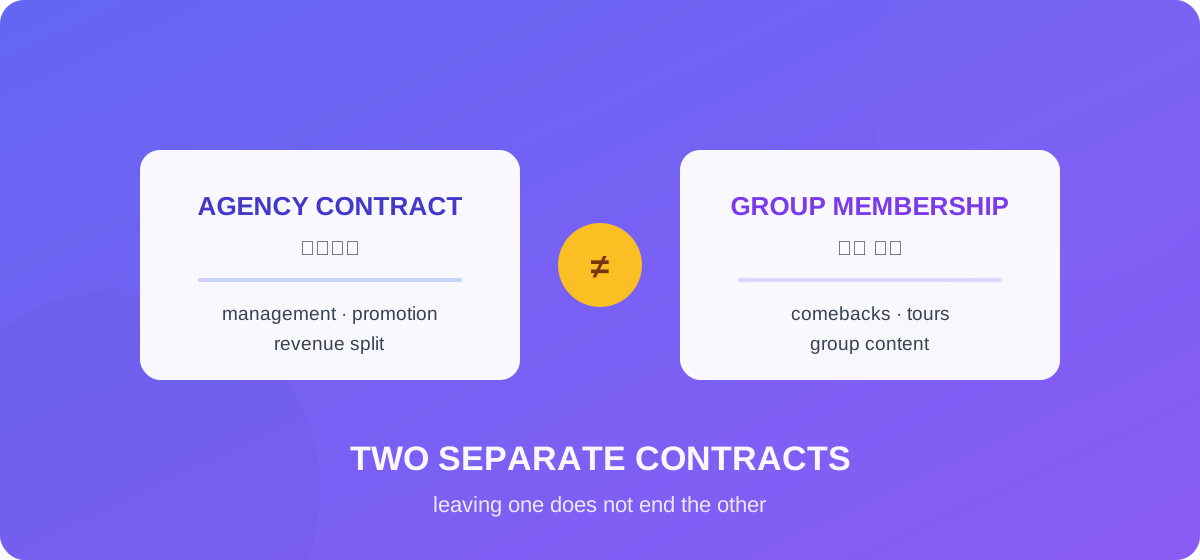
A K-pop group “disbands” when its members’ exclusive contracts with their agency are formally terminated as a group unit, ending all official group activities under that name. This is different from a member simply “leaving an agency” — disbandment ends the group itself, not just one person’s contract, and it’s usually announced through an official statement on the group’s channels.
Why This Term Matters
International fans often see the words “disbandment,” “hiatus,” and “contract non-renewal” used interchangeably in headlines, but they describe very different situations. Understanding the distinction matters because it changes what fans should actually expect next: Will there be a farewell stage? Can members debut again individually? Is this permanent or could the group reunite later?
The statement itself is the only public account of the reasoning.
Disbandments are a recurring, if bittersweet, part of the industry’s rhythm. Groups can end for many reasons: expired contracts that members choose not to renew, agency restructuring, underperformance, or simply members wanting to pursue different paths. Because K-pop contracts (often called “exclusive contracts”) are usually signed for a fixed number of years, a disbandment announcement frequently coincides with that contract period ending — which is exactly the language E Entertainment used for E’LAST.
Disbandment vs. Similar-Sounding Terms
| Term | What It Means | Is the Group Still Active? |
|---|---|---|
| Disbandment | Group’s exclusive contract is terminated; group activities end | No |
| Hiatus | Group pauses activities temporarily, often for individual schedules or health | Yes, expected to return |
| Member leaves agency | One member’s contract ends; others may continue as a smaller group or with a replacement | Yes, in altered form |
| Non-renewal (individual) | A member chooses not to re-sign after their contract term ends | Depends on the group’s decision |
| Repackage/Rebrand | Group changes name or concept but members stay together | Yes, under new identity |
The key giveaway in official statements is language like “termination of exclusive contracts” applied to the whole group, versus wording about one member’s departure or a “break” in activities.
How Fans Typically Respond and What Comes Next
When a disbandment is announced, the fan community usually goes through a fairly predictable set of steps:
- Reading the official statement carefully. Agencies often word these announcements diplomatically, thanking fans and members without detailing internal reasons. Fans comb through the phrasing for hints about future plans. No individual plans were announced alongside the disbandment statement.
- Archiving content. Longtime fans often use this window to save official photos, videos, and live performance clips before agency social accounts go quiet or channels are eventually taken down.
- Following members individually. Since group accounts stop updating, fans redirect their attention to each member’s personal or new-agency social media if and when it’s announced.
- Respecting the timeline. Reputable fan communities avoid speculating about “real reasons” behind a disbandment beyond what’s officially stated, since agencies rarely disclose full details and speculation can spread misinformation.
A Practical How-To for International Fans
If a group you follow announces disbandment, here’s a simple checklist:
- Read the original-language statement if possible. Translations can lose nuance; official Korean statements sometimes carry softer or more specific wording than translated summaries.
- Don’t assume it’s permanent for every member. Disbandment ends the group’s activities under that name and agency, not necessarily each artist’s music career.
- Watch for solo or new-group debuts. Many former group members resurface under new stage names, agencies, or units — sometimes months or years later.
- Be cautious with secondhand merchandise. Once a group disbands, official light sticks, albums, and photocards typically stop being restocked, so prices in resale markets can rise quickly.
- Give the fandom space. Disbandment days are emotional for longtime supporters; timelines can turn into farewell message threads rather than debate spaces.
FAQ
Is disbandment the same as a group going on hiatus? No. A hiatus is a temporary pause with an expectation of return, while disbandment permanently ends the group’s activities and terminates the members’ shared exclusive contract.
Can a disbanded group ever reunite? It’s rare but not impossible, especially for anniversary projects or one-off stages, though this depends on individual agreements made after the original contract ends, which are private.
Does disbandment mean members can’t continue as idols? Not necessarily. Many idols move to new agencies, debut solo, or join new groups after their previous group disbands.
Why do agencies rarely explain the full reason for disbandment? Companies often cite general reasons like “contract expiration” or “differing paths” to protect member privacy and avoid disputes; deeper internal reasons are usually not publicly disclosed.
What happens to a disbanded group’s official fandom name and light stick? These are typically retired along with the group, though they remain meaningful collector’s items for fans who supported the group during its active years.
How is disbandment different from an idol simply leaving their agency? Leaving an agency affects one member’s contract, and the rest of the group can continue with a change in lineup; disbandment ends the entire group’s contract and activities together.