
What Is a K-Pop 'Comeback'? A Beginner's Guide
A K-pop comeback isn't a return from hiatus — it's a new era. Here's what the word means, the full rollout timeline, and how to follow one as it happens.
The Quick Answer
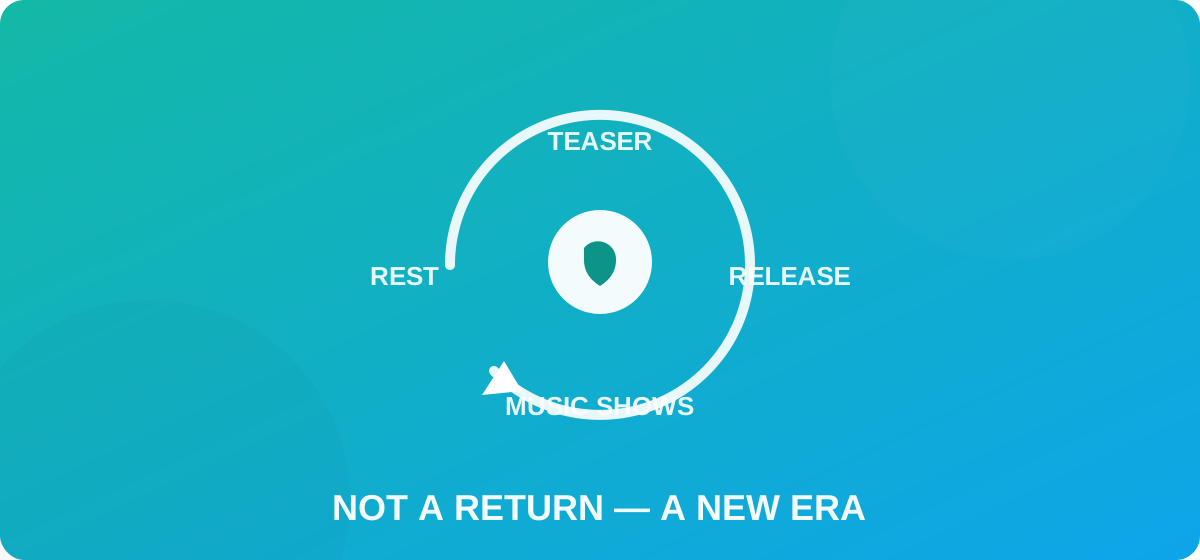
In K-pop, a comeback means an artist or group is releasing new music — an album, mini album, or single — paired with a title track, a music video, and a run of music show performances. It doesn’t imply the act ever went away. A group can have a comeback months after the last one, and many have several a year.
Why the Word Confuses Newcomers
In most English-language music contexts, “comeback” means returning after a slump or a long absence — a band reuniting after a decade. K-pop inverts it. Here the word is industry shorthand for “new era,” and it applies whether a group has been gone two years or two months.
The mismatch causes real misreadings. A headline saying a group “makes a comeback after five months” reads, to an outsider, like the group had a problem. To a K-pop fan it reads as a normal release schedule.
A typical week’s news makes the usage obvious: KISS OF LIFE announcing a date and teaser for the single album SWEAT, WayV confirming an August comeback with their eighth mini album Vision Wings, KiiiKiii dropping teaser images ahead of a mid-August date, and rookie group idntt wrapping itsnotover with a first-week sales record. None of them had disappeared. Each is starting or finishing a promotional cycle — and that cycle is the comeback.
The Anatomy of a Comeback
The rollout is remarkably standardised, usually spread over two to four weeks:
| Stage | What it looks like | Typical timing |
|---|---|---|
| Comeback announcement | A date graphic or countdown poster, usually at midnight KST | D-30 to D-14 |
| Concept teasers | Photos and clips revealing the era’s visual identity | D-14 to D-5 |
| Tracklist + highlight medley | Song titles, credits, and 10–20 second snippets | D-7 to D-4 |
| MV teasers | One or more short previews of the title track video | D-3 to D-1 |
| Release | Album and full MV drop, usually 6 PM KST | D-day |
| Music show promotions | A week or more of live stages | D+1 onward |
Two details newcomers often miss:
Everything is deliberately staggered. Each teaser is a separate news event, keeping the group in feeds and headlines for weeks rather than one day. That’s the entire design.
6 PM KST is the standard release time, which is why global fans learn to convert timezones fast. Midnight KST is the usual slot for announcements and teaser drops.
Where Pre-Releases Fit
Some eras add a pre-release single weeks before the album — a separate song with its own MV, not the title track. It effectively doubles the era’s release moments. We break that strategy down in our pre-release single guide.
What Happens After Release
The comeback doesn’t end at the MV. The promotion cycle usually runs two to four weeks and is where the numbers get made:
- Music show stages several times a week, where a group can win a trophy
- First-day and first-week sales reported through Hanteo
- Chart entries — Circle weekly charts domestically, Billboard’s World Albums and sometimes the Billboard 200 internationally
- Content flood — behind-the-scenes videos, dance practices, relay dances, and variety appearances, most of it released during the promotion window
Then the group goes quiet — and that gap, however short, is what the next announcement will be described as a “comeback” from.
How International Fans Can Follow One
- Follow official group and label accounts (X, Instagram, Weverse). Dates land there first, usually at midnight KST.
- Use comeback calendars. Fan sites and outlets compile monthly schedules; our own comeback schedules track confirmed dates.
- Learn the D-day graphics. “D-7” means seven days to release, and these posts double as the teaser schedule.
- Turn on notifications for the MV premiere. Many fans watch together at release to support early view counts.
- Convert 6 PM KST once and remember it. Most releases land at that hour.
FAQ
Does a comeback mean the group was on hiatus? No. It just means new music. Groups have comebacks a few months apart routinely.
How often do K-pop groups have comebacks? Commonly two to three times a year, though it varies widely by agency and group size.
What’s the difference between a comeback and a debut? A debut is an act’s first-ever release; every release after that is a comeback.
What is a comeback stage? The first live performance of a new title track on a music show, usually within days of release.
What time do K-pop comebacks release? Typically 6 PM KST, with announcements and teasers often at midnight KST.
Is a pre-release single part of the comeback? It belongs to the same era but is its own release moment, arriving weeks before the album with a separate song and MV.