
What Is a K-Pop Repackaged Album? A Beginner's Guide
A repackaged album re-releases an existing K-pop album with new songs added, often built around a new title track. Learn how it works, using BOYNEXTDOOR's "HOME
The Quick Definition
A repackaged album is not a brand-new album — it’s an expanded re-release of an album that already came out. The label takes the original tracklist, adds a handful of new songs (usually including a new title track with its own music video), and puts it back on the market under a new name. Fans who bought the original album get new music to look forward to without the group having to build an entire comeback from zero.
Why This Matters (And Why It’s Not Just a Cash Grab)
To a newcomer, “repackage” can sound like a rerun. In practice, it’s one of the more efficient tools in the K-pop release cycle, and it exists for reasons that make sense once you see how comeback economics work.
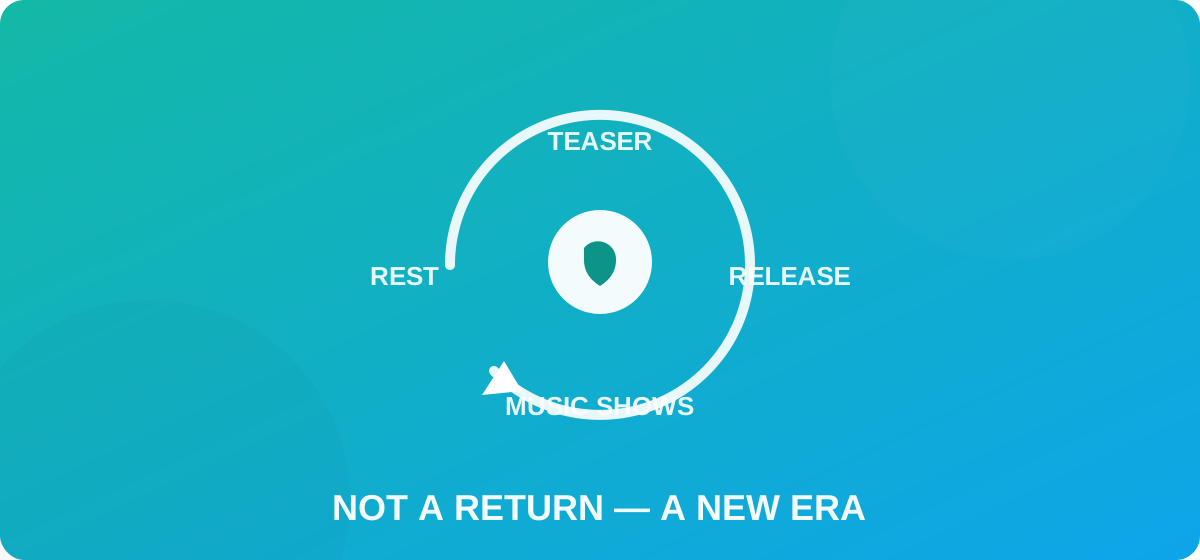
First, a repackage keeps a group visible on music shows and charts without the six-to-twelve-month runway a full comeback needs. Concepts, choreography, and most of the production are already built — the label just needs a fresh single or two, a new video, and new promotional stages. That’s a much shorter turnaround.
Second, it gives a full album’s title track a “second life.” Sometimes the strongest song on an album isn’t the first title track — a repackage lets a second single get its own spotlight, its own show wins, and its own chart run, months after the group’s initial comeback stage has ended.
Third, for collectors, a repackage is a distinct physical release: new cover art, new photocards, sometimes a new concept photo set entirely. That’s part of why repackages matter commercially, not just musically — they give completists something new to purchase even if they already own the original album.
A concrete example just landed: on September 6, BOYNEXTDOOR released the first teaser for “HOME: DELUXE,” the repackaged version of their first studio album, “HOME.” It’s due out September 28 at 6 p.m. KST. Fans who already have “HOME” aren’t getting a whole new era from scratch — they’re getting an extension of the one they already know, with new material layered on top.
Repackage vs. Other K-Pop Release Types
It helps to place “repackage” next to terms you may have already seen used interchangeably (they shouldn’t be):
- Regular album / mini album: A complete, standalone release with its own full tracklist from the start.
- Pre-release single: A song released before the main album drops, meant to build anticipation — a separate product, not an expansion of an existing one.
- Repackaged album: Takes an already-released album and reissues it with additional new tracks and (usually) a new title track.
The distinction matters because it affects what you’re buying and what to expect on music shows. A pre-release single usually gets its own promotion cycle before the “real” comeback. A repackage’s new title track gets full comeback treatment — stages, wins, the works — even though the album itself technically already exists in another form.
How to Follow a Repackage as an International Fan
- Watch for “repackage” or “deluxe” in the announcement. Labels usually say it directly, as BOYNEXTDOOR’s team did by calling “HOME: DELUXE” a repackage of “HOME.” If a release is described this way, expect fewer entirely new tracks and more of a “part two” structure.
- Check the release date gap. Repackages usually follow the original album by a few weeks to a few months — a much shorter gap than the wait between two separate comebacks.
- Look at the tracklist reveal. Most repackages keep the bulk of the original tracklist and add 2-4 new songs. If you already own the physical original album, you’ll likely be buying new photocards and packaging more than an entirely new listening experience.
- Follow the new title track like any comeback. The new single from a repackage gets its own music video, its own choreography, and its own music show promotion cycle — treat it like a real comeback for chart-tracking and voting purposes.
- Decide if you need the physical copy. If you’re purely a streaming fan, a repackage mostly matters for the new songs. If you collect photocards or albums, repackages are usually a fresh set of pulls and cover concepts worth budgeting for.
Quick Reference Table
| Term | What It Is | Example From This Week |
|---|---|---|
| Repackaged album | Re-release of an existing album with new songs added | BOYNEXTDOOR’s “HOME: DELUXE,” repackaging “HOME” |
| Original album | The first, complete release | BOYNEXTDOOR’s “HOME” |
| New title track | The lead single of the repackage, gets its own MV/promotion | ”ANIMAL” — co-produced by Zico |
| Release date | When the repackage hits stores/streaming | September 28, 6 p.m. KST |
FAQ
Is a repackaged album the same as a deluxe edition? They’re closely related and the terms are sometimes used together, as with “HOME: DELUXE.” Both describe an expanded re-release, though “deluxe” can also just mean extra physical inclusions without necessarily adding a whole new title track — check the specific announcement for details.
Do I need to buy the original album to understand the repackage? No — the repackage stands on its own as a listening experience. But if you’re collecting photocards or want the complete story of an era, having both is common among dedicated fans.
Does a repackage’s title track count as a separate “comeback” for chart records? Generally yes — it gets its own music video, its own music show promotions, and its own chart entries, even though it’s packaged with previously released songs.
How long after the original album does a repackage usually come out? It varies by group and label, but it’s typically weeks to a few months later, much shorter than the gap between two full separate comebacks. BOYNEXTDOOR’s repackage was announced not long after “HOME” itself, for instance.
Why don’t all groups do repackages? It depends on label strategy and how an album performed. A repackage makes the most sense when there’s still commercial and fan momentum worth extending — not every album cycle calls for it.
Where can I find out if a group’s next release is a repackage or a brand-new album? Official label announcements and teaser posts will usually name it directly, the same way BOYNEXTDOOR’s agency called “HOME: DELUXE” a repackaged release of “HOME” from the very first teaser.