
What Does It Mean When a K-Pop Idol Leaves Their Agency?
Agency exits explained: why leaving a label isn't leaving a group, what the seven-year rule changes, and what Jeongyeon's move from JYP actually means.
When a K-pop idol “leaves their agency,” it means their exclusive management contract (전속계약) with that company has ended, and they are now either signing with a new label or managing themselves independently. This is a separate event from leaving a group — an idol can depart their agency while remaining an active member of their group, or the move can eventually lead to bigger changes, depending on what the group’s other members and company decide.
This term just became very relevant to a lot of fans. On August 10, 2026, TWICE’s Jeongyeon personally announced on Instagram, via a handwritten letter, that she was departing JYP Entertainment after eleven years — the agency she had been with since her trainee days, and the first TWICE member to leave it. The same day, VARO Entertainment confirmed it had signed an exclusive contract with her.
The question that immediately followed — does this mean she’s leaving TWICE? — has a clear answer, and it’s worth stating plainly because it is the single most misread part of announcements like this:
No. Jeongyeon confirmed she is staying in TWICE. She is moving agencies to pursue acting under VARO while continuing her activities with the group.
In her letter she credited the other members and ONCE, TWICE’s fandom, with giving her the confidence to make the move, and thanked the staff at JYP who had worked with her since she was a trainee.
Why This Distinction Matters
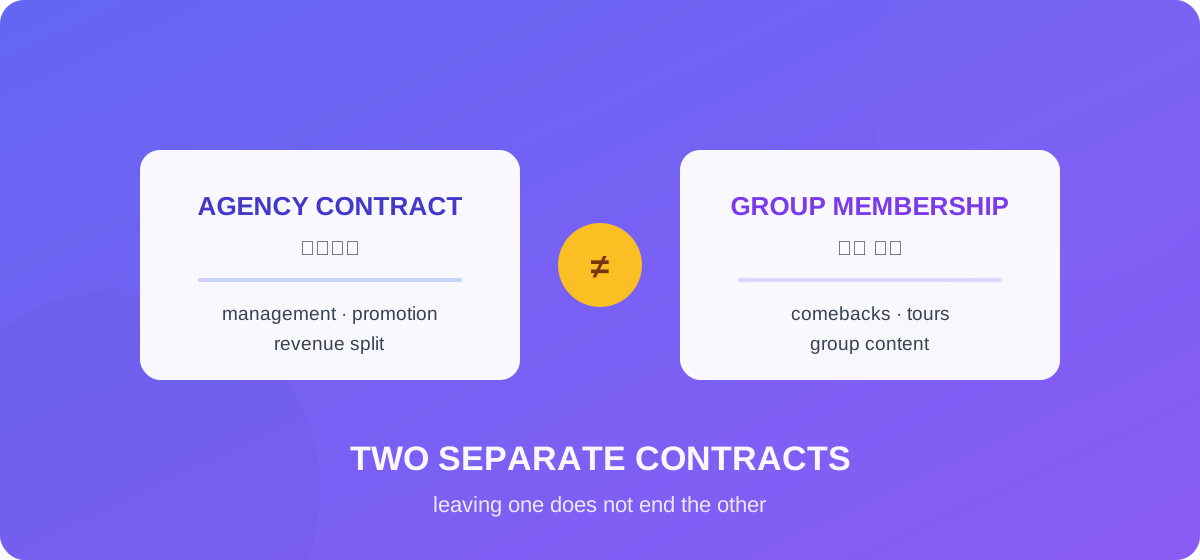
In the K-pop industry, “agency” and “group” are two different contracts stacked on top of each other. A group like TWICE is typically formed and promoted by one company (in this case JYP), and each member individually signs an exclusive contract with that same company covering both solo and group activities. When that individual contract ends — whether by mutual agreement, non-renewal, or early termination — it only legally affects that person’s relationship with the company. What happens to the group afterward depends on separate negotiations: sometimes the member stays in the group under a new arrangement, sometimes they exit the group entirely, and sometimes (rarely) the whole group moves together to a new label.
This is different from a full group disbandment, which is a decision affecting every member and typically comes with its own dedicated announcement from the company. It’s also different from a hiatus, where a member steps back temporarily but their contract stays intact.
For long-running girl groups and boy groups, agency departures tend to spike around the seven-year mark, which lines up with South Korea’s Fair Trade Commission guidelines on “standard exclusive contracts” — after seven years, members are generally free to renegotiate or walk away without needing to prove unfair terms. This is why you’ll often see multiple members of an older group make individual agency moves in the same year or two: their contracts are simply reaching that natural renewal point at similar times.
Common Vocabulary Around Agency Departures
| Term | What It Actually Means |
|---|---|
| Contract expiration (계약 만료) | The original contract term ends naturally; neither side is at fault |
| Contract termination (계약 해지) | The contract is cut short, sometimes due to disputes |
| Non-renewal | The idol or company chooses not to sign a new contract after expiration |
| Exclusive contract (전속계약) | The core legal agreement covering management, promotion, and revenue split |
| New agency signing | Confirmation that the idol has joined a different company going forward |
| Independent/solo agency | The idol starts managing their own career without joining another label |
Notice that none of these terms, by themselves, say anything about group membership. That detail is always confirmed separately, usually by the group’s agency or in a joint statement.
How to Read These Announcements as an International Fan
- Check who is speaking. A personal Instagram letter from the idol confirms their own decision and feelings, but it won’t cover legal group logistics — that typically comes from the company.
- Look for a second statement. In Jeongyeon’s case, VARO Entertainment issued its own announcement the same day confirming the signing. Two matching statements (idol + new agency) is a strong signal the departure is finalized, not just a rumor.
- Wait on group-status questions. Don’t assume disbandment, sub-unit changes, or exit from group content based on an agency announcement alone. Group-related news is usually a distinct, later statement.
- Watch official language carefully. Words like “departure from the group” or “will continue promoting as part of [group]” are very different from silence on the topic — and silence just means it hasn’t been addressed yet, not that the answer is bad news.
- Follow the new agency too. Once an idol joins a new label, that company’s official channels often become the primary source for future schedules, comebacks, or solo projects.
A Quick Comparison
It helps to see how different this is from other transitions fans commonly encounter:
- Agency departure (this article): Idol’s management contract changes; group status separate.
- Group disbandment: The group itself stops existing under that name; usually a dedicated joint announcement — as with KARD in 2026.
- Hiatus: Member pauses activity temporarily, contract and group membership unchanged.
- Sitting out promotions: Narrower still — the member skips specific activities in one comeback cycle, usually for health reasons. We cover what that looks like in practice separately.
- Sub-unit formation: A smaller group forms from existing members alongside their main group activities — a completely different, usually positive, career move. See what a sub-unit is.
Why Acting Is So Often the Reason
Jeongyeon’s stated goal — acting — is one of the most common drivers behind an agency move, and the logic is structural rather than personal.
Music agencies are built for music: they have A&R, choreography, music show relationships, and album production. Acting runs on an entirely different network of casting directors, drama production companies, and film agencies. A label that is excellent at launching a comeback may have no meaningful pipeline into a drama role.
So when an idol’s ambitions shift toward acting, moving to a label with that network is often the practical step — not a statement about the old agency, and not necessarily about the group at all. It’s why agency departures cluster among members in their late twenties and early thirties, when group schedules loosen enough to allow a second career.
FAQ
Does leaving an agency mean an idol is leaving their group? Not automatically. The two are legally and practically separate decisions, and one doesn’t confirm the other. Always wait for a specific statement about group status.
Why do idols announce agency departures on personal social media instead of through the company? It’s become common practice for the idol to share their own message first, framing the news personally, often followed same-day or soon after by the new agency’s formal confirmation.
What is VARO Entertainment? The agency Jeongyeon signed with on August 10, 2026, and where she plans to build an acting career. It is also home to her older sister, the actor Gong Seung-yeon — which makes the move a family reunion as much as a career one, and helps explain the choice of a label oriented toward acting rather than music.
Is this the same as a member “graduating” from a group? No — “graduation” is typically used for specific formats (like project groups or certain girl group traditions) with its own defined process. A standard agency change doesn’t automatically use that term unless the group or company specifically frames it that way.
Where should I look for the most reliable updates? The idol’s verified social media, the new agency’s official statements, and the original agency’s official announcements are the three sources to check — in that order of immediacy.
Is Jeongyeon still in TWICE? Yes. She confirmed she is continuing with the group; the change is to her management contract only. She is pursuing acting under VARO alongside TWICE activities.
Why does the seven-year mark keep coming up? Because South Korea’s Fair Trade Commission standard exclusive contract runs seven years. After that point members can renegotiate or leave without having to argue the terms were unfair, which is why departures cluster there.
Does an agency change affect a group’s comeback schedule? Not by itself. Group schedules are set by the group’s agency, and a member with an outside management contract can still participate. Confirmed dates go on our 2026 comeback tracker.